
TIAMS Postdoctoral Fellows
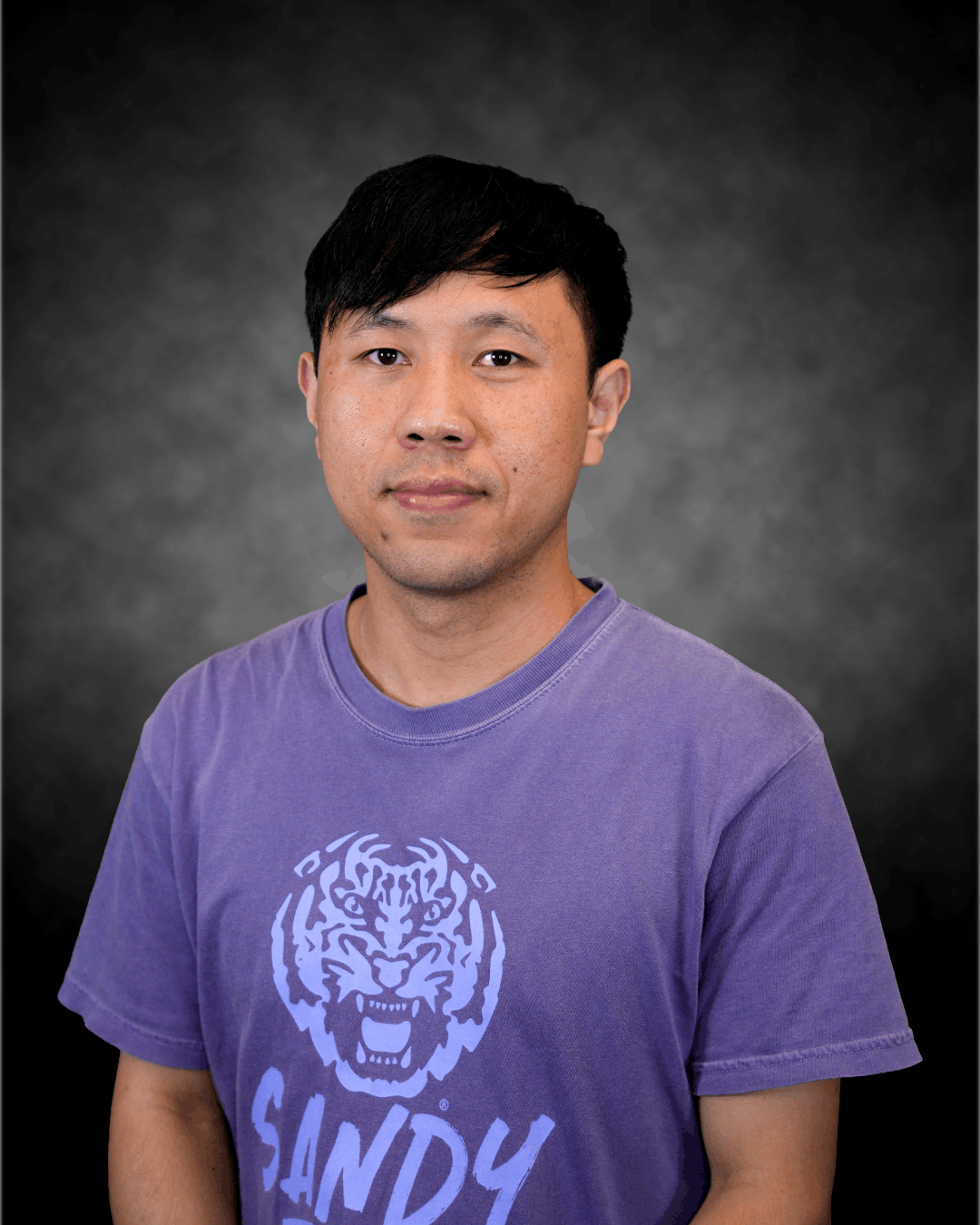
Junyuan Fang
| Ph.D.: University of Tennessee, Knoxville |
| Office: 125B Prescott Hall |
| Phone: 225-578-2350 |
| Email: jfang8@lsu.edu |
Junyuan Fang works in the analysis of partial differential equations, with particular emphasis on regularity theory for elliptic and parabolic equations with singular or degenerate coefficients. His recent work develops Harnack inequalities, weighted Sobolev estimates, well-posedness results, and Hessian estimates for equations in which classical uniform ellipticity can break down. These problems require new analytic structures adapted to the degeneracy, including weighted geometries, perturbative methods, and quantitative estimates for solutions. Fang's research extends the 2026–27 TIAMS Mathematical Analysis program into the regularity theory of difficult PDEs, complementing the year's work on spectral theory, nonlocal and multiscale models, harmonic analysis, and the mathematical structures that remain stable when standard assumptions fail. As a TIAMS Postdoctoral Fellow, he is part of the resident analytical community connecting the year's meetings, seminars, and working-group activity.
That description is well supported by his papers: the published Harnack work proves Krylov–Safonov-type estimates and Hölder regularity for singular/degenerate parabolic equations; another paper develops weighted Sobolev spaces and proves existence and uniqueness; and his 2026 work establishes weighted \(W^{2,\varepsilon}\) estimates as groundwork for fully nonlinear singular-degenerate equations.
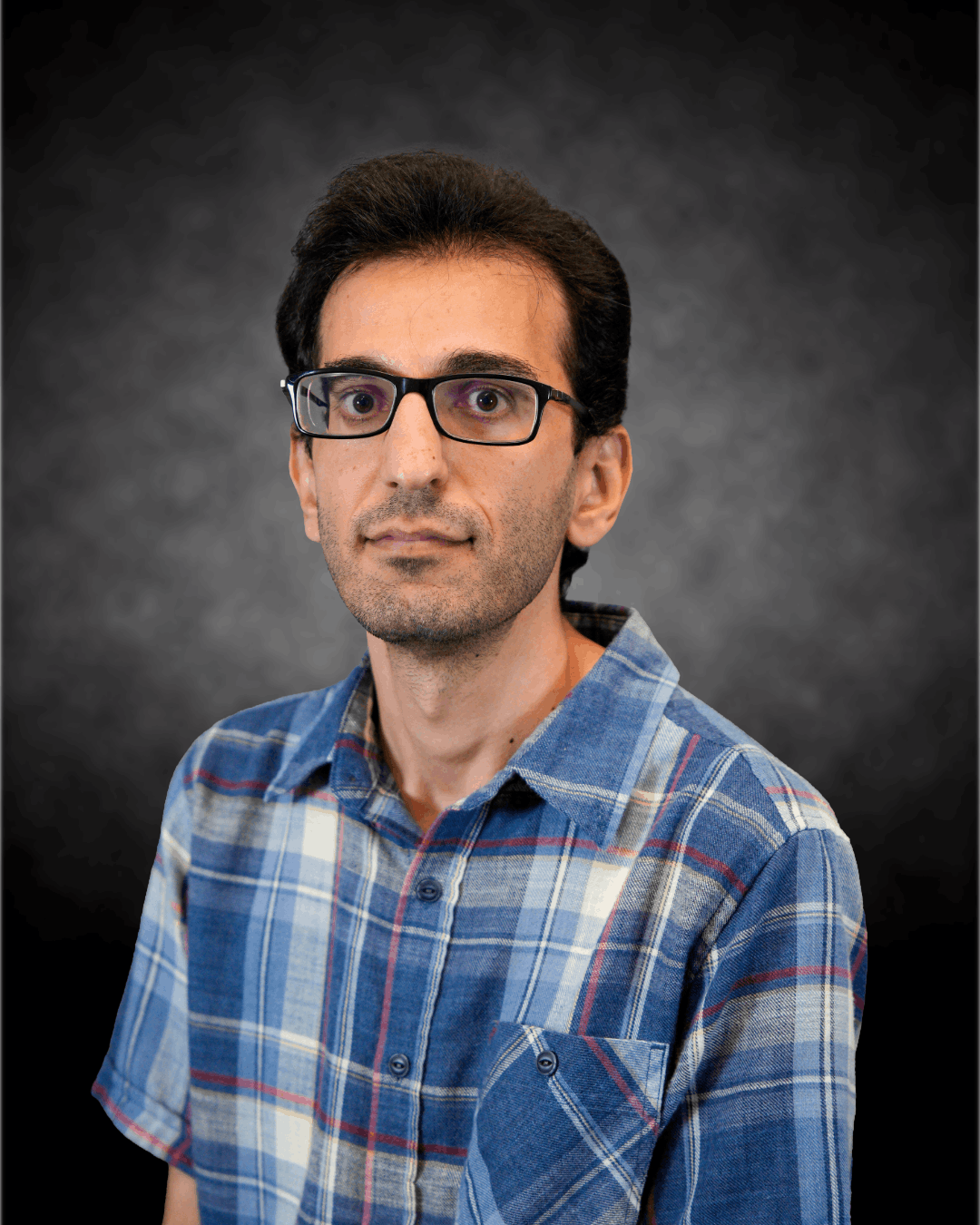
Yaghoub Rahimi
Research interests: Discrete Harmonic Analysis, Analytic Number
| Ph.D.: Georgia Institute of Technology |
| Office: 204 Lockett Hall |
| Phone: 225-578-2711 |
| Email: yrahim1@lsu.edu |
Yaghoub Rahimi works at the intersection of discrete harmonic analysis, analytic number theory, and additive combinatorics. His research uses Fourier-analytic methods and the Hardy–Littlewood circle method to study averages over the primes, additive representations of integers, arithmetic progressions, and sparse arithmetic sets. Recent work ranges from density theorems for sums of primes to prime configurations with restricted-digit differences, while joint work on generalized Minkowski–Funk transforms connects arithmetic small-divisor phenomena with spectral multipliers and Sobolev regularity on the sphere. This places Rahimi directly within the 2026–27 TIAMS Mathematical Analysis program, especially its interface among harmonic analysis, arithmetic, geometry, oscillation, and reconstruction. As a TIAMS Postdoctoral Fellow, he contributes to the resident community that carries these questions between workshops, seminars, and continuing research collaborations throughout the year.