



LSU Research Insight: Want a Better Memory? Get Good Sleep
December 01, 2025

Juhee Hamm
Dr. Juhee Haam is an assistant professor in LSU’s Department of Biological Sciences, whose research focuses on understanding memory and identifying brain health factors critical to preserving memory.
One underappreciated factor critical for memory formation and preservation is sleep quality. You might have noticed that in the winter, when days get shorter and you have less exposure to sunlight (which helps set your body’s internal clocks), you have more trouble sleeping.
What impact does sleep loss have on your brain and your memories? Learn more in our Q&A with Haam:
Q&A
Why is sleep so important to memory consolidation? What does this mean for sleep deficits?
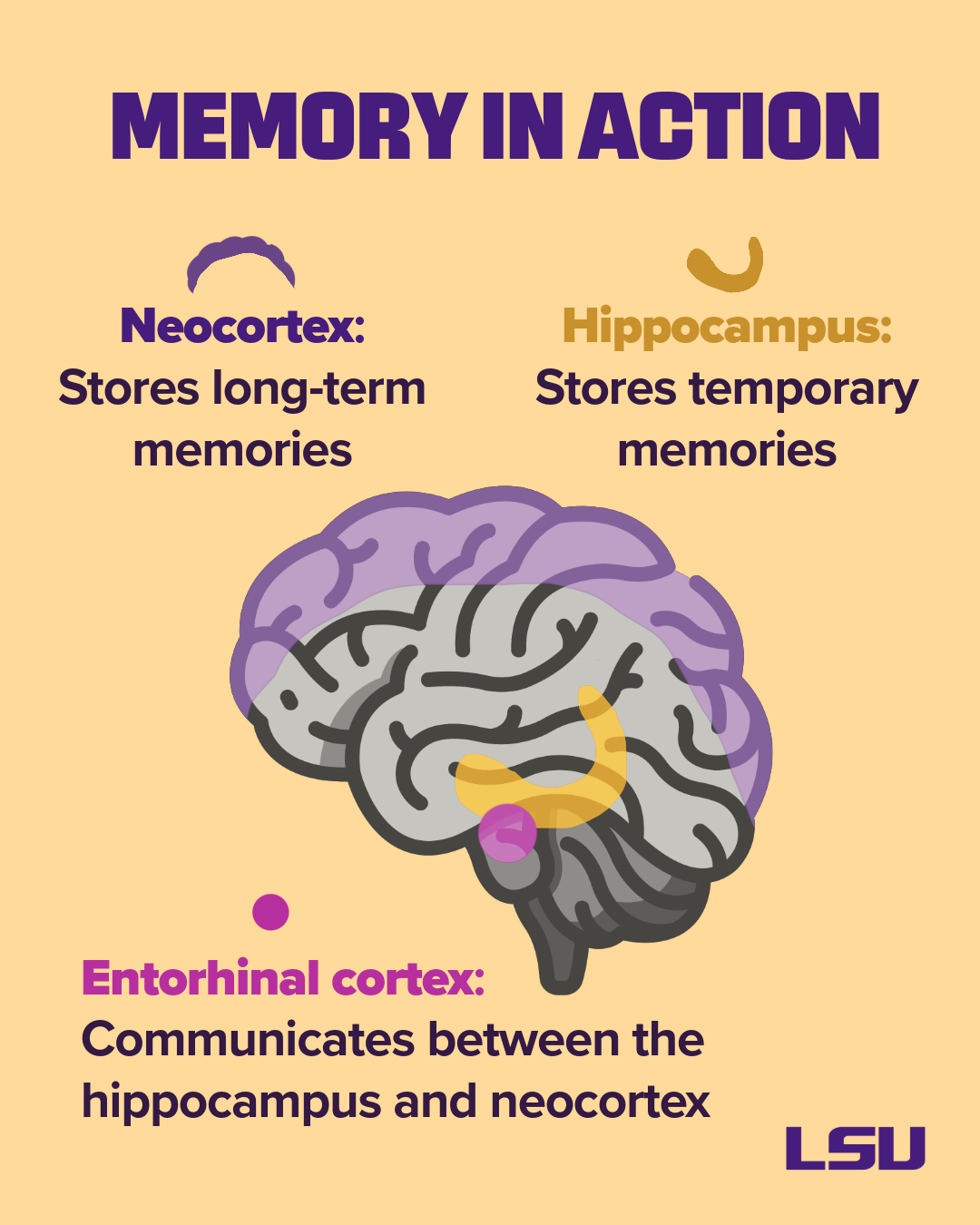
Sleep is important for the restoration of the body, but it also plays a crucial role in memory consolidation. This is the process by which your brain turns temporary memories about recent experiences into stable, long-term memories. While you sleep, the amount of sensory information you process (such as what you see or hear) is minimal, allowing your brain to focus its energy on uninterrupted memory consolidation processes. Sleep fragmentation and reduced deep sleep impair memory consolidation.
Why is sleep so important to memory consolidation? Brain rhythms that occur during sleep, such as slow-wave electrical activity in the neocortex and electrical bursts or “ripples” in the hippocampus, are essential for memory consolidation. Some of our previous research has shown that delta oscillations (brain waves) in the entorhinal cortex, a brain region severely affected in Alzheimer’s disease, are critical for the formation of long-term memory.
Sleep is also critical for clearing waste products from the brain. Sleep deprivation promotes the accumulation of misfolded proteins and protein aggregates responsible for neurodegenerative diseases, for example.
Editor’s note: Brain waves are patterns of electrical activity in the brain. Delta oscillations are a type of slow brain wave that occur during deep sleep.
Can you tell us more about your research on memory formation in the brain?
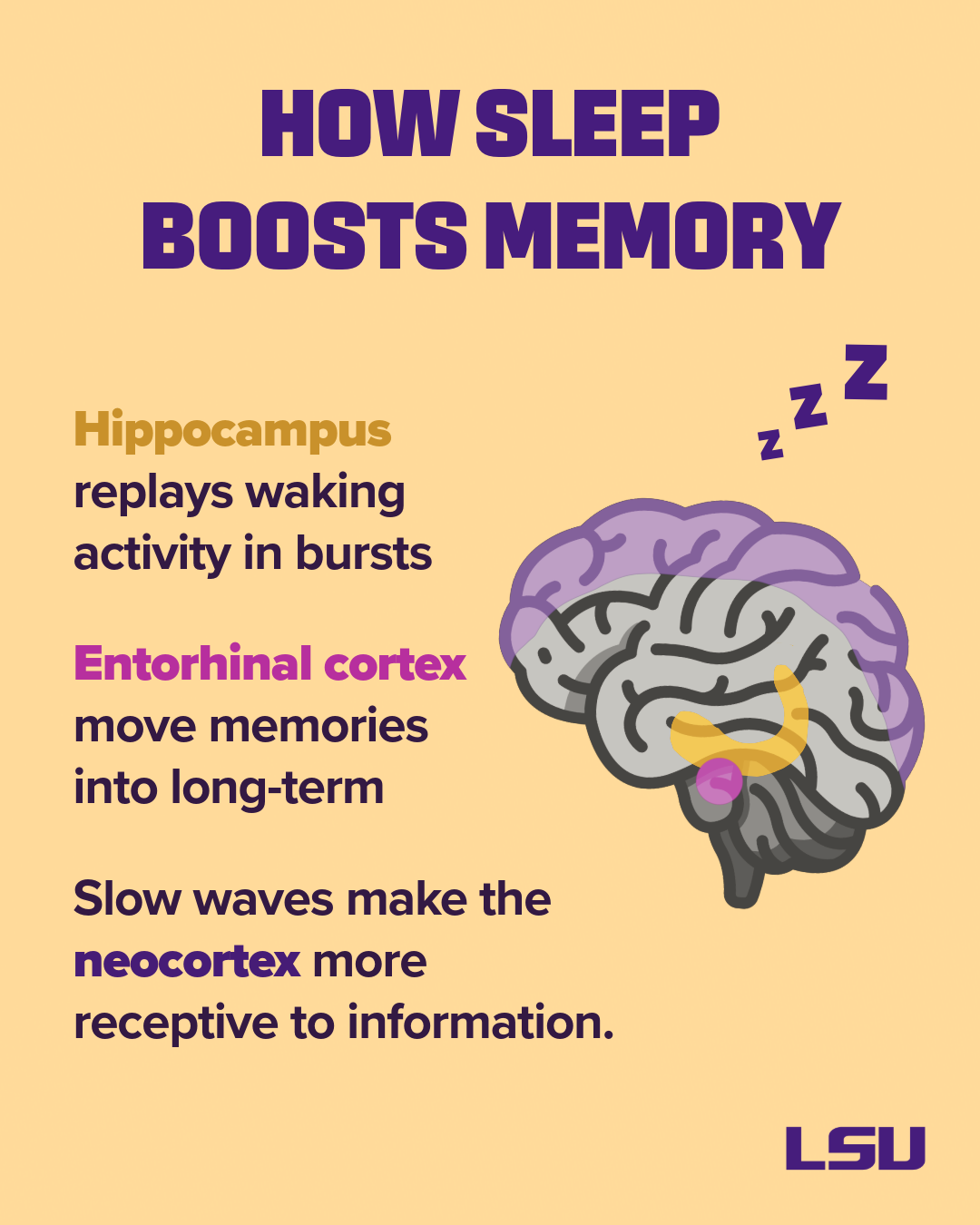
Our lab focuses on understanding how long-term memories are formed, with a particular focus on the role of the entorhinal cortex.
As you actively learn things during waking, temporary memories are formed in your hippocampus. On the other hand, long-term, stable memories are formed offline, primarily during sleep, in your neocortex. Memory consolidation is not a standalone process; rather, it occurs through the integration of new information into existing memories, influenced by prior experiences.
Our lab is interested in the role of the entorhinal cortex in the memory integration process and how it is impaired in Alzheimer’s disease. We are exploring how the entorhinal cortex facilitates communication between the neocortex and the hippocampus.
Editor’s note: The entorhinal cortex sits below the hippocampus in the brain. It has been described as the gateway to the hippocampus, relaying sensory information to and from the hippocampus from other regions, such as the neocortex.
What excites you about the increasing research around sleep and its impacts in removing waste products or “cleaning” the brain?
We spend a third of our lives sleeping. While there have been advancements in recent years, I believe there is still much to discover regarding sleep and brain function.
In my lab, we are interested in understanding the underlying cellular mechanisms that occur during sleep, which will help us elucidate brain dysfunction caused by sleep disturbances. One of the research questions we are currently working on is, how does the dysfunction of sleep-associated brain waves impact protein aggregates and inflammation in the brain? Research on this question would help us understand the complex mechanisms of sleep-mediated waste clearing, which involves both neurons and glia, two major types of brain cells.
Are there interplays between sleep, disturbed metabolism, and dementia in terms of impacts on the brain?
Alzheimer’s disease is known as “type 3 diabetes” due to the strong correlation between Alzheimer’s disease and diabetes. What does this have to do with sleep? Sleep disturbance and diabetes also have a close relationship. Sleep deprivation increases the risk of type 2 diabetes, and sleep disturbance is commonly observed in diabetic patients and animal models of diabetes. Similarly, sleep deprivation increases the risk of developing Alzheimer’s disease, and sleep disturbances are typical symptoms of Alzheimer’s disease.
Editor’s note: Sleep disturbance has been associated with Alzheimer’s disease risk.
What can we all do to ensure we protect the memory processes and systems of our brain and keep them healthy?
Our brain function is influenced by multiple factors, such as genetics, diet, exercise, and lifestyle. When it comes to long-term memory formation, a good night’s sleep is essential in maintaining brain health.
Discover stories showcasing LSU’s academic excellence, innovation, culture, and impact
across Louisiana.Next Step