
Cybersecurity Awareness Month 2026
Week 1
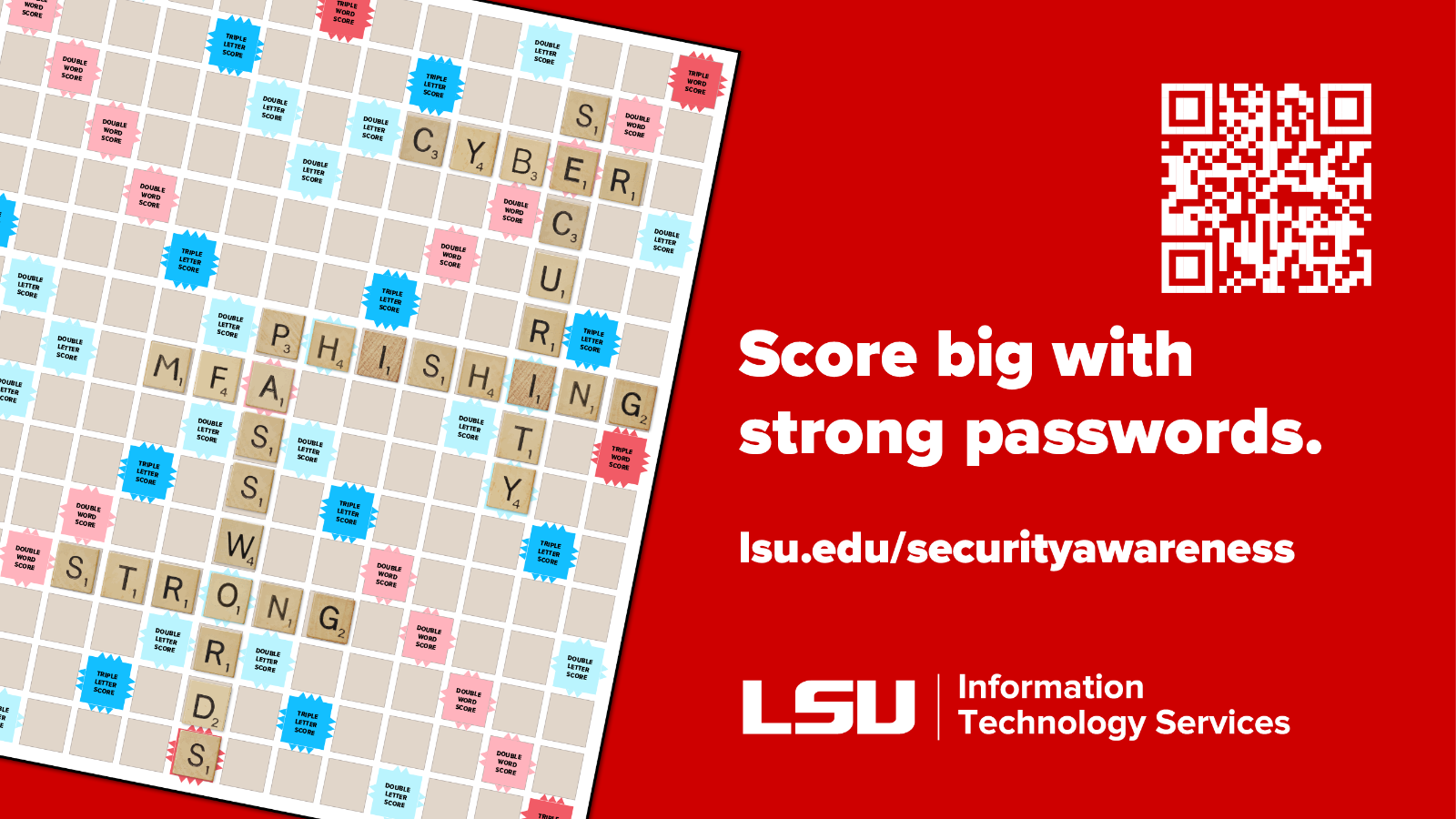
Score Big With Strong Passwords
Password Management, MFA, and Passkeys
Expand the sections below to learn more.
Malicious actors can use AI to test thousands of password combinations every second.
If you're still using short or reused passwords, it's time to switch to a password
manager.
A password manager securely stores your usernames and passwords in an encrypted vault
and can generate strong, unique passwords for each account. You only need to remember
one master password to access your vault.
Pro Tip: Your vault password is the key to all your accounts. Make it long (15+ characters),
unique, and difficult to guess.
- Automatically fills in login credentials
- Works across most devices and operating systems
- Stop recycling passwords by easily creating strong, unique passwords
- Warns about potential phishing websites
- Alerts you to potentially compromised passwords
- Some support multi-factor authentication for added security
Password managers are one of the safest ways to store credentials and are far more
secure than notebooks, notes apps, browser-based storage, or reused passwords. While
no solution is risk-free, a reputable password manager significantly improves your
security.
Look for the following features:
- Zero-knowledge architecture: Your data is encrypted on your device. This means that the provider has no knowledge of your passwords or information. Only you can unlock your vault.
- Multi-factor authentication (MFA): Adds an extra layer of protection.
MFA adds an extra layer of security by requiring two or more forms of verification,
such as a password, PIN, biometric scan, or security code/tokens.
MFA is one of the most effective ways to protect your accounts. Even if a password
is compromised, an attacker cannot gain access without the additional verification
factor. Whenever available, enable MFA on personal accounts such as Google, Amazon,
and social media platforms.
Stay Alert: Never approve an MFA request you did not initiate and never share MFA verification
codes with anyone.
MFA at LSU: MFA is available for LSU services that use Microsoft authentication, including Workday,
Outlook, Teams, Box, and Zoom. Configure both a primary and backup authentication
method and, when possible, enroll multiple devices to avoid being locked out.
Looking ahead: Beginning in early 2027, Microsoft will be phasing out the phone-call authentication
method. If you currently use this method, consider switching to a passkey for a more secure and convenient sign-in experience.
Passkeys provide a secure way to sign in without typing a password. When you create
a passkey, your device generates a public key that is stored by the website and a
private key that remains securely on your device. To sign in, you authenticate using
a fingerprint, Face ID, PIN, or another device unlock method.
Why are passkeys more secure?
Because your private key never leaves your device, it can't be stolen in a data breach
or easily intercepted by attackers. This makes passkeys significantly more resistant
to phishing and credential theft than traditional passwords.
Protection Against Fake Websites
One of the biggest advantages of passkeys is that they are cryptographically bound
to the website they were created for. If you accidentally click a link to a fake website
designed to look like your bank, email provider, or favorite online store, your passkey
won't work because the domain doesn't match the legitimate site.
This built-in protection helps prevent phishing attacks by stopping you from unknowingly authenticating to an imposter website, even if the fake page looks identical to the real one.
Are Passkeys Replacing Passwords?
While passkeys are becoming more common, many websites still rely on passwords. That's
why using a password manager remains a smart way to secure your accounts.
Take the next step: If your favorite websites or apps offer passkeys, consider enabling them for a more
secure and convenient sign-in experience. Check out the additional resources to learn
more about how passkeys can help protect your online accounts.
Put your knowledge to the test, unlock coordinates, and search campus for QR codes
for a chance to win stuff! Take this week’s quiz!
Prefer a digital challenge? Try our new virtual escape room!
(Please note: participation in the virtual escape room does not qualify for the drawing.
Players must complete the geocache to be eligible to win.)
Week 2
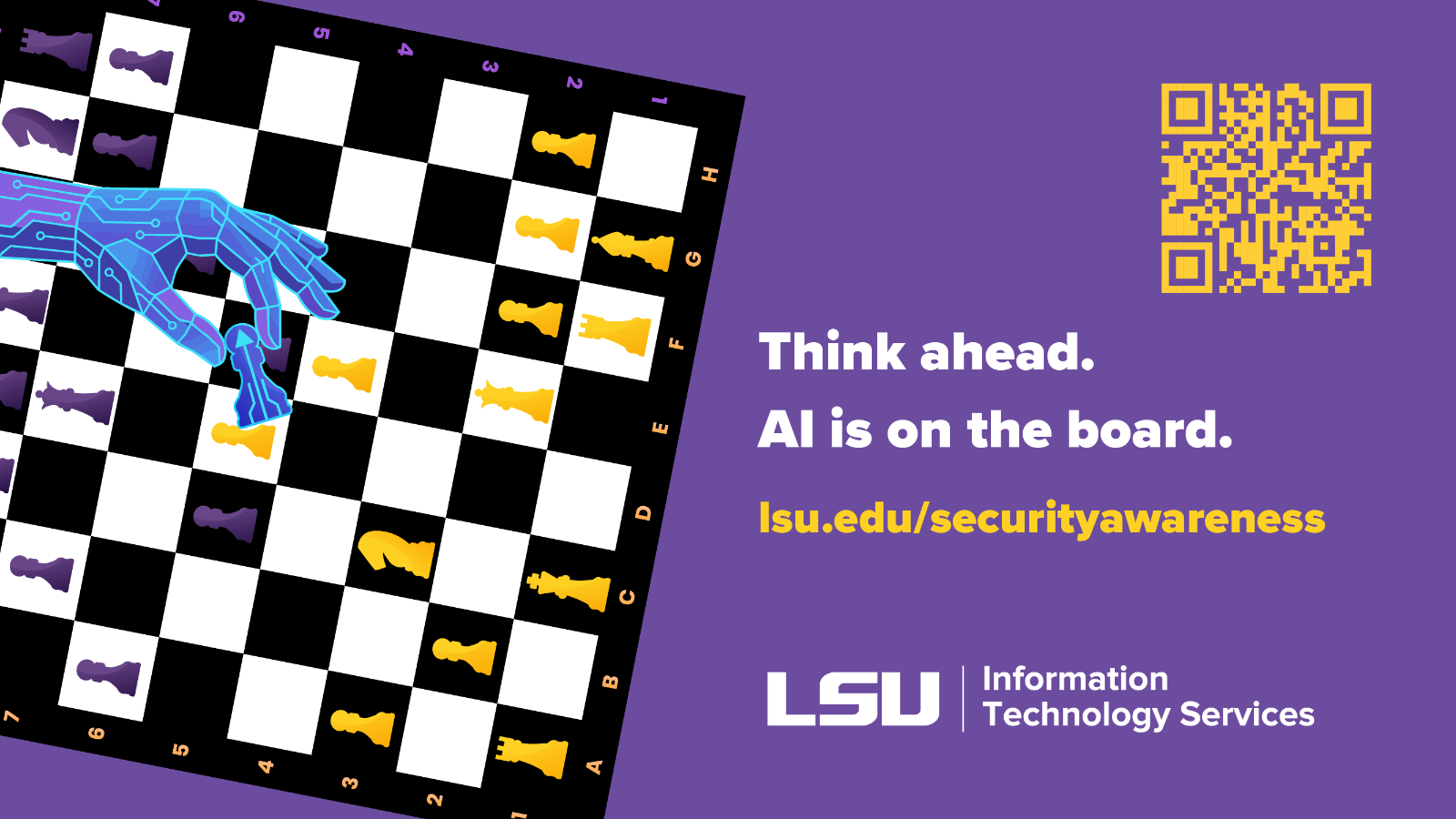
Think ahead. AI is on the board.
AI Safety
As AI becomes part of our daily lives, it’s important to understand the technology so that you can take the appropriate steps to keep your data and the data of others safe. Expand the sections below to learn more!
Whether you're using AI for work or personal tasks, following a few simple guidelines can help ensure your data security:
- Don’t Share Sensitive Data
- Data provided by users can be used by AI models to improve its responses. Never share sensitive data such as passwords, social security numbers, or bank details with AI services.
- Fact-check Answers
- AI content can often be inaccurate, misleading, or contain copyrighted material. AI models have been known to produce strange responses, sometimes referred to as “hallucinations”. It’s your responsibility to ensure that the data you receive is accurate
- Check Permissions/Privacy
- Review the privacy statement and carefully read over any permissions requests when downloading or using AI applications. In fact, this is a good guideline for any software or application use.
- Understand Organizational Policies
- Before using AI tools, ensure they are approved by your organization and comply with applicable policies, regulations, and data handling requirements. See LSU's AI Acceptable Use Policy.
- Secure Your AI Accounts
- Use a unique password of at least 15 characters and enable MFA whenever possible. Strong passwords and MFA work together to help keep your AI accounts safe from unauthorized access.
One of the most important considerations when using AI is protecting sensitive information.
Entering private, confidential, or personal information into an AI tool may expose
that data beyond its intended audience or retention period. Sharing this information
could lead to privacy, reputational, or legal repercussions.
Never Share:
- Passwords or authentication codes
- Social Security Numbers
- Credit card, banking, or other financial information
- Protected Health Information (PHI)
- Student, employee, or customer records
- Private data such as contracts, license agreements, software code or research data
Before Sharing with AI, Ask Yourself:
- Is this information public?
- Am I authorized to share this data?
- Does this AI platform have approved security and privacy controls?
- Could sharing this data create legal, regulatory, or reputational risks?
Cybercriminals are increasingly using AI to create more convincing scams. AI can generate realistic emails, text messages, voice recordings, images, and videos that may appear legitimate at first glance. Familiarize yourself with some common AI-powered scams:
Phishing Emails and Messages
Scammers use AI to easily create highly personalized professional-looking communications to steal credentials, financial information, or personal data.
Example: You receive an email regarding a job offer with little or no interview process. The employer requests sensitive information early in the process.
- How to protect yourself: Research the company and verify any job openings directly through official channels.
Deepfake Voice Calls
It only takes a few seconds of audio or video to create a convincing AI voice clone. Attackers use these voice clones to manipulate victims into sharing information or sending money.
Example: A parent receives a call that sounds like their child saying they’ve been arrested and need to be wired money for bail.
- How to protect yourself: Establish a “Safe Word” with family, friends, and coworkers so that you know if a call is legitimate. You can also disconnect the call and call back using a stored contact number to verify the request.
Deepfake Images and Videos
AI-generated images and videos can be used to impersonate people, organizations, or brands to spread misinformation or commit fraud.
Example: An employee receives a video message that appears to show their boss requesting an emergency wire transfer.
- How to protect yourself: Do not trust a video simply because it looks real. Verify unusual requests through a separate communication channel.
Be mindful of what you share, prioritize data security, and you can benefit without putting your data or your organization’s data at risk.
Put your knowledge to the test, unlock coordinates, and search campus for QR codes for a chance to win stuff! Take this week’s quiz!
Prefer a digital challenge? Try our new virtual escape room!
(Please note: participation in the virtual escape room does not qualify for the drawing. Players must complete the geocache to be eligible to win.)